














Table of Contents
Imagine an AI tool that helps a student learn history. What would happen if that student only had a Western perspective throughout their learning and all other aspects of African or Asian cultures and history were ignored? This is a relevant example of what we will cover. In this article, we will examine cultural biases in artificial intelligence, their origins and effects, and then turn to pragmatic and actionable means and solutions. Our goal is to provide you with an education that is inclusive and devoid of excessive technical jargon. After all, AI can be a great friend, but only to the extent that we are ethical and open-minded about how it works. The OECD, in a report assessing the potential impact of AI on equity in education, stated that these technologies exacerbate inequalities if no action is taken.
Along the same lines, in its report , UNESCO highlights that the role of bias in artificial intelligence is to harm cultural equity.
Analyzing cultural biases in educational AI
Let's take it step by step, gently, so that everyone—teachers, readers, parents, and even programmers—can benefit. Cultural bias in artificial intelligence is educational. Let's start at the beginning. What do we know about the term “cultural bias in artificial intelligence systems”?
These are biases that are unconscious and embedded in cultural algorithms because of the data used.
Let's assume that the dataset used for training contains mostly statements in American English, the AI could then wrongly approve of images from other parts of the world. Biases can be classified into several categories: the lack of representation of a culture, artificial biases that feed on stereotypes, and algorithmic biases, which feed on them with each new prediction. What are the causes? Especially the data used for teaching. Imagine directories like Wikipedia, where the editors are almost exclusively from Europe and the USA. When it comes to teaching tools, it's like an AI that, for students with low representation in the country of study, its evaluation of the data is significantly lower than that of its peers. The extensive research dating from 2025 illustrating the cultural biases found in language learning tools clearly shows how the lack of diversity in development teams gives rise to these biases.
Stanford, for example, noted in its 2025 AI Index report that AI models for education, and teaching more broadly, are among the most recent to retain cultural biases.
To spot them, you don't need to be a programming expert. More rudimentary audits, such as testing AI on multicultural scenarios, can do the trick. Access inexpensive software that is made publicly available for output review.
Here you have additional summaries to learn more about the subject.
| Type of bias | Example in education | Common origin |
|---|---|---|
| Representation | AI that ignores African examples in applied mathematics | Under-diversified datasets |
| Implicit | Stereotypical suggestions (e.g., culturally gendered professions) | Biased historical data |
| Algorithmic | Error amplification in personalized assessments | Uncorrected feedback loops |
Analyzing data like the OECD's on emerging divisions in AI helps us understand this problem without too much complexity. As a teacher or user, these signs are there to be better countered.
Impacts of cultural bias on education
Cultural biases in education: brutal dimensions and impacts. For learners, these biases can create a feeling of exclusion and a lack of collaboration . Take the example of a young girl of North African origin who does a literary revision using AI: the tool ignores genres and fills in the gaps with European authors, her level of self-esteem only negatively impacts her motivation and results. A 2025 mini-review in Frontiers in Psychology showing that AI, and in particular the social relationships it maintains, negatively impacts student well-being.
With biased interactions, the well-being of students in particular is adversely affected.
On the one hand, socio-socio inequalities, on the other hand, the bias of AI, socially modest students and those from geographical cultures, are insiders of a mechanism that is unfair to the nation, and clandestinely.
Let's take some concrete examples: A bias against non-Western accents was found in oral assessments with AI-powered educational tools, which were part of a study on AI in higher education .
Another case, part of the UNESCO report, shows how generative AI reproduces biased business norms, which in turn impacts inclusive research and teaching.
For educators, the challenge is disproportionate: how do we teach equality and diversity issues when the tool being used teaches the opposite ? The good news is that with attention, we can transform these situations into learning opportunities.
Practical and accessible solutions
Let's focus on solutions rather than problems. We firmly believe that it is possible for every individual to do at least something, even without extravagant budgets or sophisticated skills . First, technical topics: Diversify datasets. Use free tools to culturally enrich your augmented intelligence tools. For example, add local language texts or global text examples. A 2024 Cornell study shows that a set of model bias correction instructions can reduce some cultural biases within a model.
Make sure you audit frequently. Create a straightforward checklist, such as "Does the output reflect more than one culture?"
Educationally, train yourself and your students. Encourage human feedback: Combine AI with group discussions to correct biases in real time. For an inclusive audience, involve communities: Ask minority parents or students to test the tools.
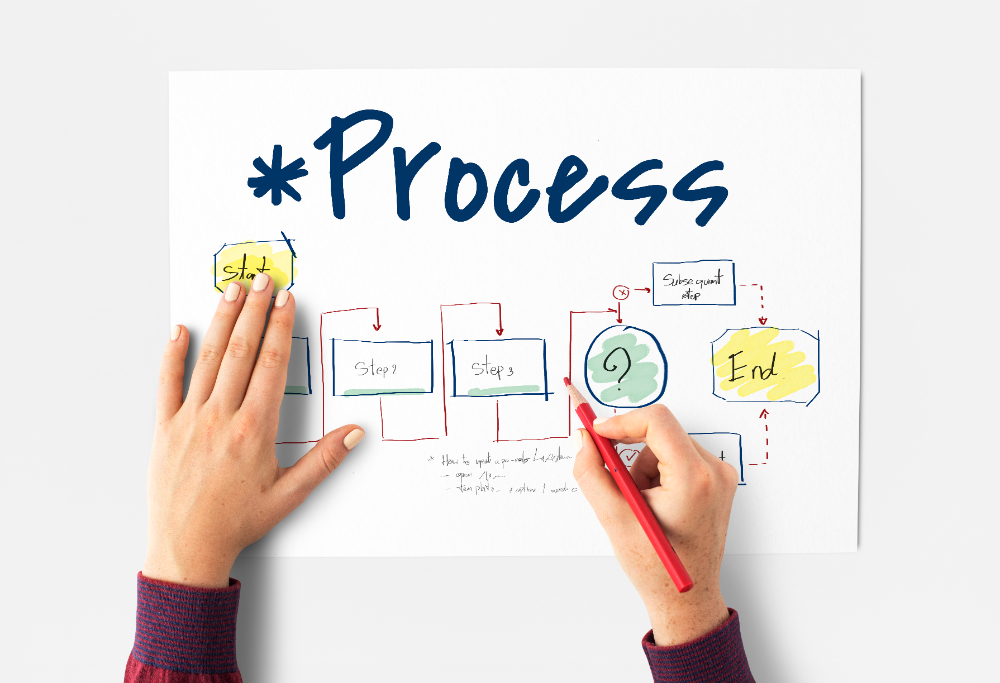
Here is an accessible step-by-step guide:
- Evaluate your tools : Test with various scenarios (e.g., a lesson on history seen from Africa).
- Diversify inputs : Add inclusive data via open-source tools.
- Train and collaborate : Organize sessions with colleagues to share best practices.
- Monitor and adjust : Use tools to mitigate bias as a team.
It’s simple, concrete, and it works for everyone .
Conclusion
In summary, cultural bias in educational AI is a real challenge, but not an insurmountable one. It stems from imperfect data and impacts equity, but with solutions like diversification and training, we can build inclusive education. The future lies in a humane approach to these technologies. We encourage you to test these ideas in your daily life. Together, let's make AI a tool for everyone.