






















Table of Contents
As algorithms and gadgets have invaded our society, we often wonder what the role of authentic education is. Think of a student, in front of a computer, having a deep interrogative dialogue that allows them to construct even more complex and optimistic ideas. Isn't this the heart of what Socrates gave us more than 2,000 years ago? His method, which is conversational and interrogative , is more useful than ever in these digital days when we have plenty of information, with little deep reflection. Together, let's go in search of a Socrates, not as a fossil but as a living guide to help redefine educational equity.
But who was Socrates?
Let's start with who Socrates was. Socrates was an Athenian philosopher who influenced ancient and modern civilizations even though he wrote nothing, thanks to disciples like Plato. His approach was different from the norm. He focused less on imposing a "prefabricated" truth on the learner, but sought understanding and wanted to help them "give birth" to their own version of the truth.
Given today's rapid technological advances, new opportunities have emerged to revitalize such principles, particularly with the use of AI in education. According to Fakour and Imani's research , AI-powered educational platforms can replicate Socratic dialogues to foster critical thinking among students, regardless of their geographic locations, disabilities, or other determinants.
For example, some applications like chatbots can personalize learning paths, making education more inclusive.
Why rediscover Socrates now?
Because digital technology, while offering unlimited access to knowledge, poses major challenges: information overload, passive learning, and unequal access in terms of costs. As an educational community—teachers, parents, students, and tool designers—we must come together to adapt these ancestral ideas to our modern realities . This article offers not only an analysis of the Socratic foundations and current challenges, but also concrete, accessible, and inclusive solutions, such as the use of free applications for interactive dialogues. Together, we can transform education into a space where every individual, regardless of their background, becomes an actor in their learning.
The Educational Philosophy of Socrates: Foundations and Principles
Let's delve deeper into Socratic reflection, which remains an essential foundation for any educational approach aimed at emancipation. According to Socrates, real knowledge is built through doubt and conversation. The famous "I know that I know nothing" is not an acceptance of ignorance, but a proposition of intellectual humility, which can be understood by all, regardless of their status or background. This passage illustrates a principle of inclusion par excellence: education is not exclusive to an elite, but available to anyone who wishes to question it.
What are the pillars on which his method is based?
First, there is ongoing dialogue, where the teacher uses open-ended questions to help the learner make their own discoveries. Then, there is maieutics, a comparison to childbirth that allows the birth of each person's deep-seated ideas. Finally, there is self-reflection, which encourages the student to analyze their beliefs in order to assess their robustness. These elements differ from traditional directive methods, which consist of transmitting standardized knowledge. Research by Yueh-Ren Ho, Bao-Yu Chen, and Chien-Ming Li confirms that this method effectively develops critical thinking, which is essential in a complex world. For example, in varied educational contexts, it helps neurodivergent learners structure their reflections in a personalized way, promoting true inclusion.
The Challenges of Education in the Digital Age
Despite its promise, the digital age poses challenges that concern us all. We are witnessing information overload: social media and search engines bombard learners with fragmented, often context-free information, hampering critical thinking. This information overload narrows attention and promotes superficial learning, where we consume rather than create. Add to this the impact of AI, which provides instant answers but risks short-circuiting the reflective process, as shown by comparisons between human tutors and chatbots.
Critical thinking skills are under strain : in a world dominated by algorithms that determine our content, how can we encourage independent critical thinking? Without support, students struggle to master these skills in distance learning. These challenges must be addressed with compassion, realizing that digital technology is not an enemy, but a tool to be mastered together to promote inclusive education.
Rediscovering Socrates in Digital: Integrations and Concrete Solutions
Digital technology makes it possible to revitalize Socrates in an inclusive way. Here, we suggest affordable approaches, verified by recent studies, to bring his philosophy into the modern era using innovative tools. AI-powered virtual assistants
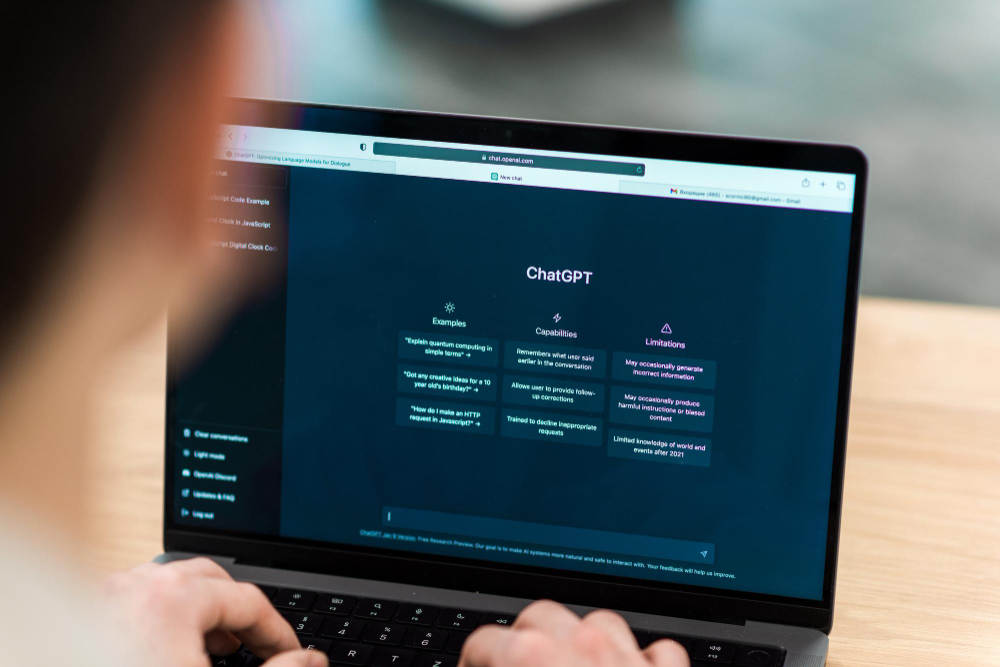
, or chatbots, can conduct Socratic conversations by asking open-ended questions to support the learner in their self-discovery process . For example, free tools such as ChatGPT, suitable for teaching, encourage deep reflection without providing immediate answers. One practical approach is to download an app such as Maike or Socratic Mind, and initiate a session by asking three successive questions on a topic such as the environment. Users can access them with a smartphone, even in low bandwidth situations, and adaptation for neurodivergent learners is possible.
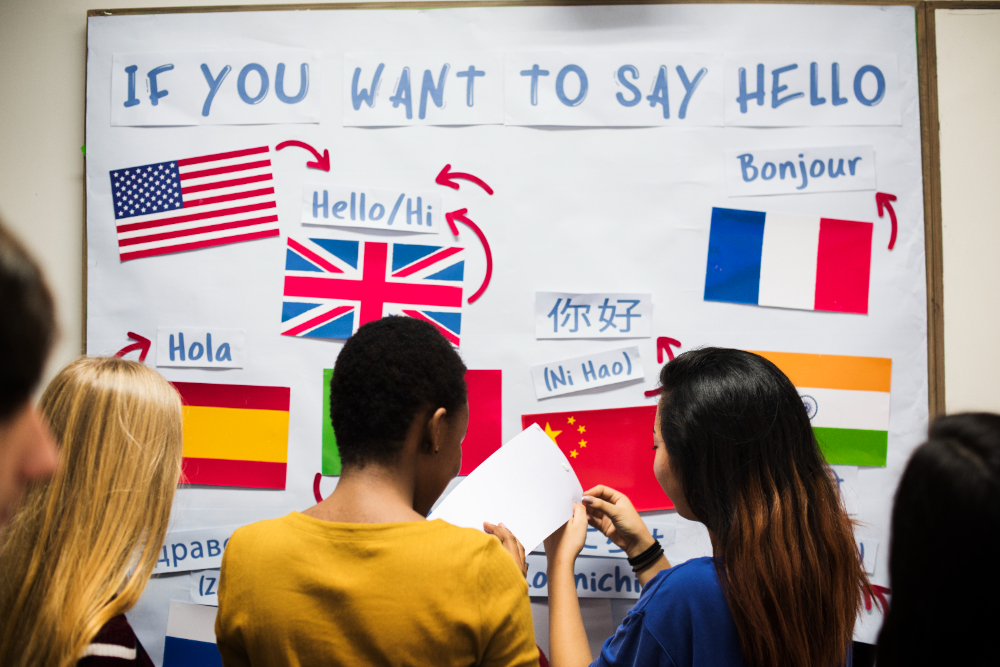
Then, by leveraging tools like Discord or Moodle, it's possible to create online discussion spaces and virtual communities to encourage Socratic exchanges with a multicultural dimension. Add machine translations and AI-generated subtitles to include all audiences, especially the hearing impaired and those who don't speak French. Organize a weekly session where a moderator asks open-ended questions, collecting anonymous feedback to adapt the method to suit needs.
SMS is an effective low-tech alternative for question-and-answer communication, especially in regions with limited facilities. These integrations have been shown to promote engagement and critical thinking, making education more robust.
We encourage everyone to experiment with these methods: start small, monitor results, and adjust for optimal inclusion.
Conclusion
By rediscovering Socrates through a digital lens, we open the door to active, inclusive, and transformative education. These ancestral principles, combined with modern tools, allow us to overcome the challenges of developing thoughtful citizens, regardless of their context. Let's test these solutions together, with kindness, for an equitable educational future.
Comments are closed.